Oil Prices Surge 13% — Can Brent Really Hit $120?
On February 28, 2026, the United States and Israel launched coordinated strikes on Iran's nuclear facilities and military sites. Oil markets reacted immediately. Three days later, on March 2, QatarEnergy halted all LNG production after Iranian drone strikes hit the Ras Laffan and Mesaieed industrial complexes. The Strait of Hormuz — the world's single most important oil chokepoint — effectively closed.
WTI crude spiked as much as 13% intraday. Brent hit its highest level in 18 months. Here's what's happening, how serious it is, and what investors should actually do about it.
Why This Conflict Is Different: Two Supply Shocks at Once
Middle East conflicts always move oil. But this one is different because two massive supply shocks hit simultaneously.
Shock #1: Strait of Hormuz Blockade
The Strait of Hormuz is a narrow waterway — 33 to 97 km wide — connecting the Persian Gulf to the Gulf of Oman. About 20% of all seaborne oil passes through it daily, roughly 20 million barrels. Saudi Arabia, UAE, Kuwait, and Iraq all ship their exports through this single chokepoint.
On March 2, Iran officially declared a blockade. Tanker traffic fell 70% within hours. More than 150 vessels are now anchored outside the strait waiting for clearance. All four of the world's largest shipping lines have suspended operations through the corridor.
Shock #2: Qatar LNG Production Shutdown
Qatar is the world's largest LNG exporter, supplying roughly 20% of global LNG. The Iranian drone strikes on March 2 forced QatarEnergy to halt production entirely.
UK natural gas prices jumped 50%. Dutch TTF gas futures surged 45%. Bangladesh, India, Pakistan, and other LNG-dependent Asian economies are feeling the most acute pain.
Current Prices: The Shock Has Started, But May Not Be Half Over
As of March 5, 2026:
| Commodity | Current Price | Change vs. Pre-War |
|---|---|---|
| WTI Crude | $72–75/bbl | +10–13% |
| Brent Crude | $79–82/bbl | +10–13% |
| Natural Gas (TTF) | — | +45% |
| LNG (Asia spot) | — | +50% |
The reason prices haven't moved more is that OPEC+ immediately announced production increases and Saudi Arabia signaled its intention to stabilize supply. But if the Hormuz blockade drags on, the calculus changes dramatically.
What History Says About Oil and War
The depth and duration of oil shocks vary wildly across conflicts.
| Event | Oil Price Change | Duration |
|---|---|---|
| 1973 Yom Kippur War | $3.56 → $11.16 (+213%) | Years |
| 1990 Gulf War | ~2× spike then recovery | Months |
| 2003 Iraq War | Actually stabilized | Fell during war |
| 2022 Russia-Ukraine | $80 → $130 (+63%) | Months, then reversal |
The pattern is clear: when supply is actually disrupted, prices stay high. When wars don't directly interrupt supply, prices normalize quickly. Everything hinges on whether the Hormuz blockade produces real, sustained supply reduction.
Three Scenarios: How High Can Oil Go?
Scenario 1 — Quick Resolution (Bear Case): Brent $58–65
The war ends within 4–5 weeks or negotiations restart. Trump himself said he expects the conflict to last "four to five weeks." OPEC+ production increases cover the supply gap, Saudi Arabia quickly fills the void. This matches the EIA's 2026 Brent forecast of $58.
Scenario 2 — Months of Conflict (Base Case): Brent $75–80
The war grinds on for several months, but the Hormuz Strait partially reopens for traffic. Goldman Sachs upgraded its Q2 Brent forecast to $76. Energy stocks hold up, but a risk-off environment weighs on growth stocks broadly.
Scenario 3 — Extended Blockade (Bull Case): Brent $100–120
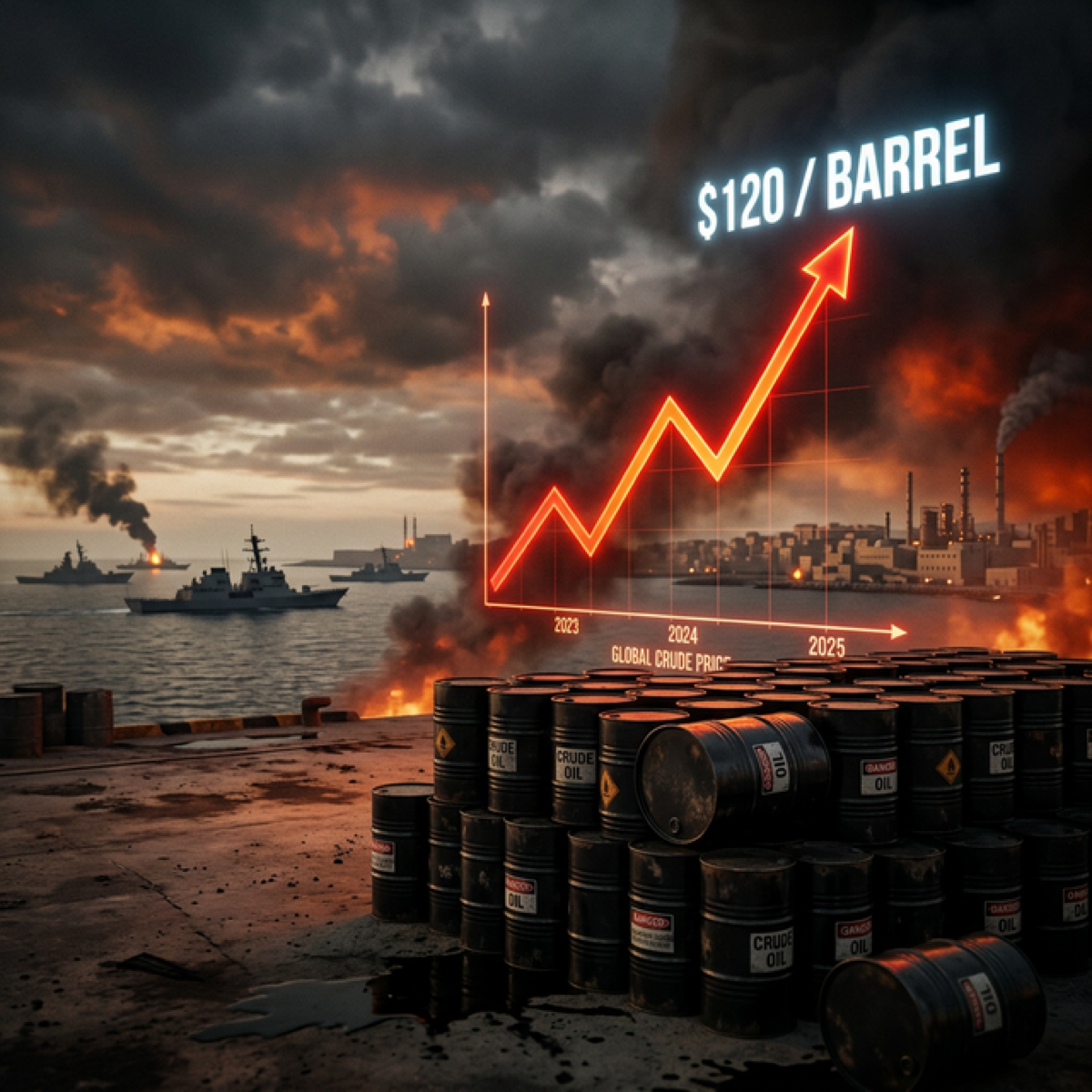
Iran maintains the blockade for months and additional attacks hit Saudi refining infrastructure. Bank of America flagged the $100+ scenario, with some analysts projecting up to $120. Secondary effects would ripple into aluminum, steel, and fertilizer prices. European and US import flows could be disrupted by more than 20%.
Where to Invest: Sectors That Benefit
Energy Sector
The most direct beneficiary.
- XLE (Energy Select Sector SPDR): Diversified exposure to ExxonMobil, Chevron, and other US energy majors. Captures oil price upside across the sector.
- Equinor, Vår Energi: Norwegian energy companies that jumped 9%+ immediately after the conflict escalated. Full oil price upside without any Middle East operational exposure.
- US Natural Gas Stocks: Qatar's LNG shutdown dramatically increases demand for US LNG exports. Significant spillover benefit expected.
Defense Sector
Defense stocks move fast when wars start. This time was no exception.
- Lockheed Martin (LMT): +6%
- Northrop Grumman: +5%
- RTX Corp: Missile and air defense systems in high demand
- AeroVironment: Drone specialist, +10%+
- SHLD (Global X Defense Tech ETF): Diversified defense exposure, up 14% in 2026
Gold
Geopolitical stress drives safe-haven demand into gold. Already at all-time highs, with more upside the longer the conflict runs.
Risks: What Could Keep Oil from Rising Further
OPEC+ Production Increase: Saudi Arabia was reportedly pre-positioning output increases before the US strikes. OPEC+ agreed to add 206,000 bbl/day in April. This could partially offset Iranian supply losses.
Nuclear Deal Restart: US-Iran had been in what officials called the "most intense" nuclear negotiations ever, right up until the strikes. A faster-than-expected end to hostilities and return to the negotiating table could send oil sharply lower.
US Shale Ramp-Up: High oil prices incentivize US shale producers to drill more. The lag from drilling to production is several months, so the short-term cushion is limited.
Bottom Line: Sector ETFs Beat Directional Oil Bets
Oil is caught between two opposing forces right now — war risk premium pushing up, OPEC+ supply push pulling down. There's more upside if the blockade holds, but a fast war conclusion could unwind the premium just as quickly.
For retail investors, making directional bets on crude is risky. Crude oil futures ETFs have roll costs that erode returns over time. And oil itself is swinging 10–15% on individual news events right now.
The practical approach is diversified sector ETF exposure:
- For energy upside: XLE
- For defense upside: SHLD
- Blending both provides coverage across both the oil spike and the extended conflict scenarios
When the war ends and oil normalizes, trim the position. Until then, energy and defense have the strongest fundamental tailwinds in the market.
This post is for informational and analytical purposes only, not investment advice. All investment decisions are your own responsibility.